
In Provence, as the Rothkos Sold
Notes from Provence on the 7-minute Joby flight to Manhattan, the persistence of elevated rates, and Tadao Ando, Matisse, and a record Rothko.
Contents
Late May in Central Park. Memorial Day weekend, the unofficial start of summer—arriving this year under a stretch of unrelenting rain, and a quiet moment to remember those who lost their lives in service.
A few things I’ve been thinking about this week.
The 7-Minute Flight vs. The 80-Minute Reality
Last week I had a terrific trip to Paris and Provence. Other than the Air France delays, which we took in stride by immersing ourselves in our books, the most painful part was the trip to and from JFK. A cool 70 minutes of stops and starts, crawling along.
This is such a familiar New York experience. The AirTrain has been around for years, but a seamless connection between Manhattan and JFK still feels elusive. The options are limited and highly dependent on where you live, especially if you’re hauling suitcases.
So I paid close attention to what Joby Aviation pulled off on April 27th.
The company completed the first electric air taxi flight between JFK and Manhattan, landing at Blade’s heliports. The trip took 15 minutes, and is projected to be as short as 7.
The aircraft is quieter than a helicopter and runs on zero emissions.
Joby already owns Blade, so the routes and heliport relationships are in place. What’s missing is FAA certification. The CEO has suggested commercial service could begin in New York as early as the second half of this year, though a more cautious view puts it within the year.
Either way: 7 to 15 minutes versus 70 to 80. The case makes itself.
For decades, one of New York’s most important journeys— the trip between Manhattan and its primary international airport— has remained surprisingly inefficient.
Accessibility has always shaped real estate values. For global cities, airport connectivity isn’t a luxury. It’s core infrastructure.
Whether electric air taxis ultimately become commonplace is still an open question.
The 7-minute flight has captured so much attention because it highlights how overdue New York is for faster, more coherent ways of moving people to and from its airports.
Rates: Persistence, Not Change
Source: Apollo Chief Economist, Torsten Slok
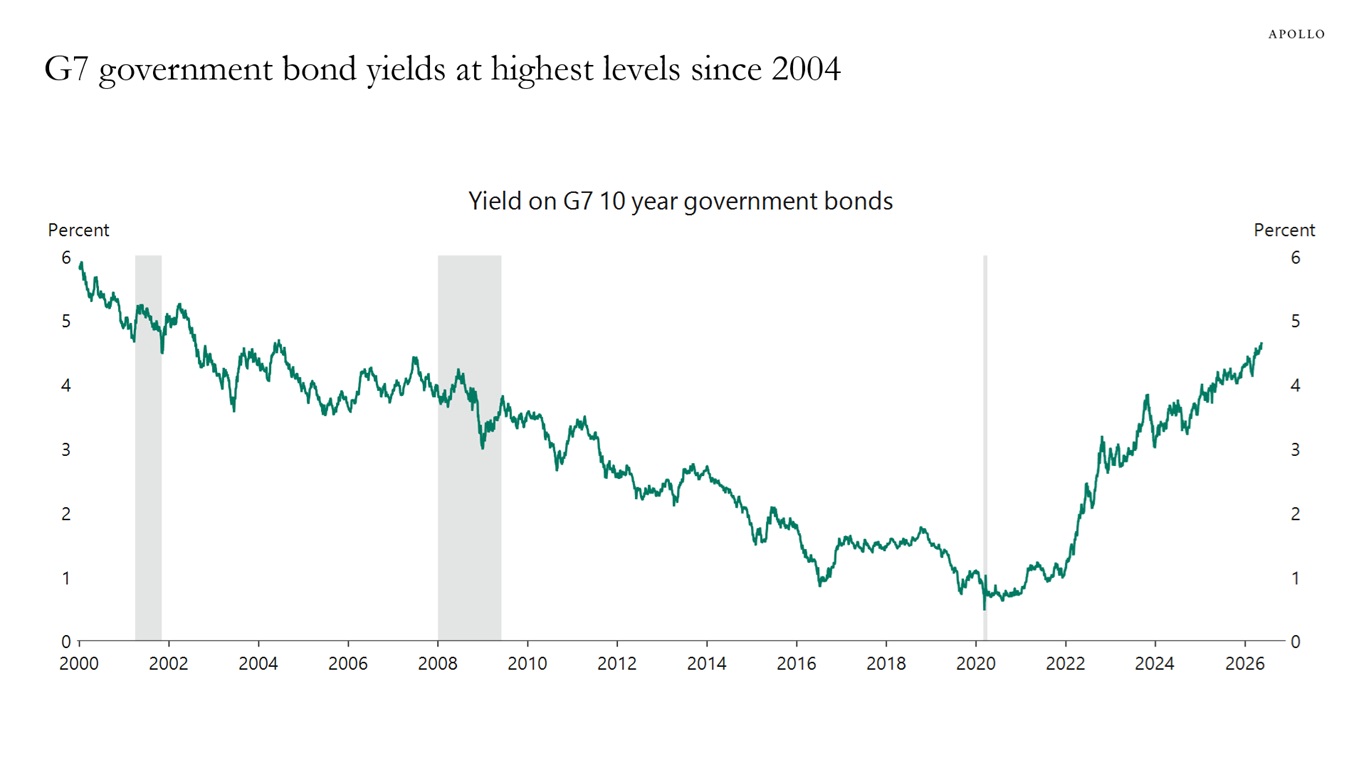
The chart above, from Torsten Slok of Apollo Global Management, shows G7 government bond yields now at their highest levels since 2004.
According to Slok, the move is being driven by several forces.
Energy prices have moved higher again, with geopolitical tensions in the Middle East adding renewed inflationary pressure. At the same time, persistently large government deficits are requiring sustained—and increasing— bond issuance.
Quantitative easing has largely ended, and in the U.S., the Fed’s balance sheet is shrinking.
Investors are adjusting to that reality. They’re demanding higher compensation for inflation risk and longer-term uncertainty.
Mortgage rates tend to move with long-term bond yields, particularly the 10-year Treasury. So as yields remain elevated, borrowing costs for buyers do as well.
In real estate, that continues to translate into a more segmented market where well-priced properties move and buyers remain highly deliberate. This is simply the environment we’re operating in.
Art, Architecture — and What Endures
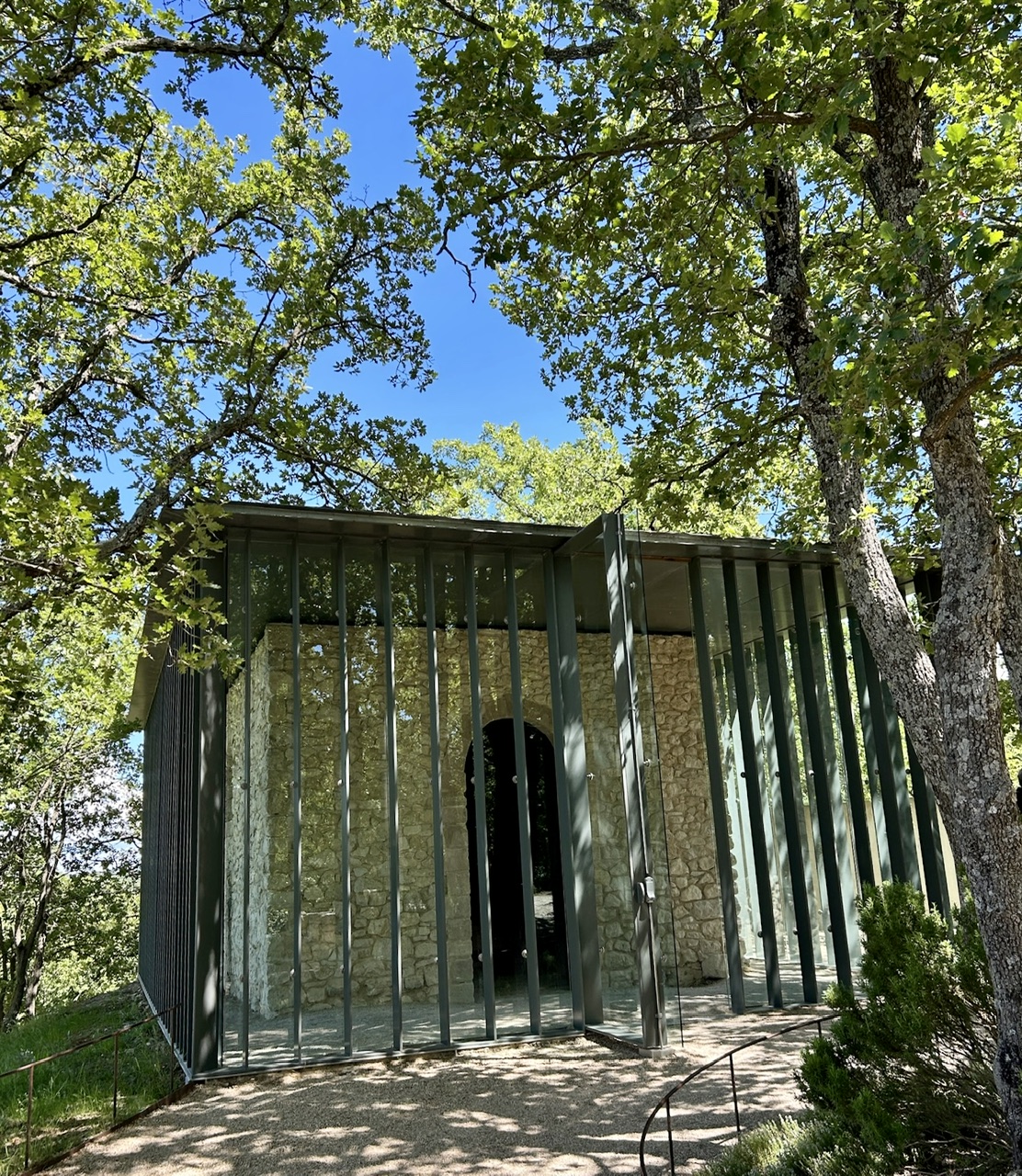
The Chapel (Tadao Ando) within Château La Coste’s architecture collection.
We visited the magnificent Château La Coste near Aix-en-Provence. Among my favorite installations was Tadao Ando’s chapel—a stone structure that feels almost ancient, enclosed within glass and steel, set at the top of the estate with an unobstructed view over the Provençal countryside. It’s a dark, rectangular space, the only light coming from small openings in the wall behind the altar.
It’s remarkably simple. And yet powerful. Light, proportion, and material do all the work. There’s nothing ornamental, nothing extra. Just a clarity that holds your attention.
It’s a reminder that architecture, at its best, can feel like art.
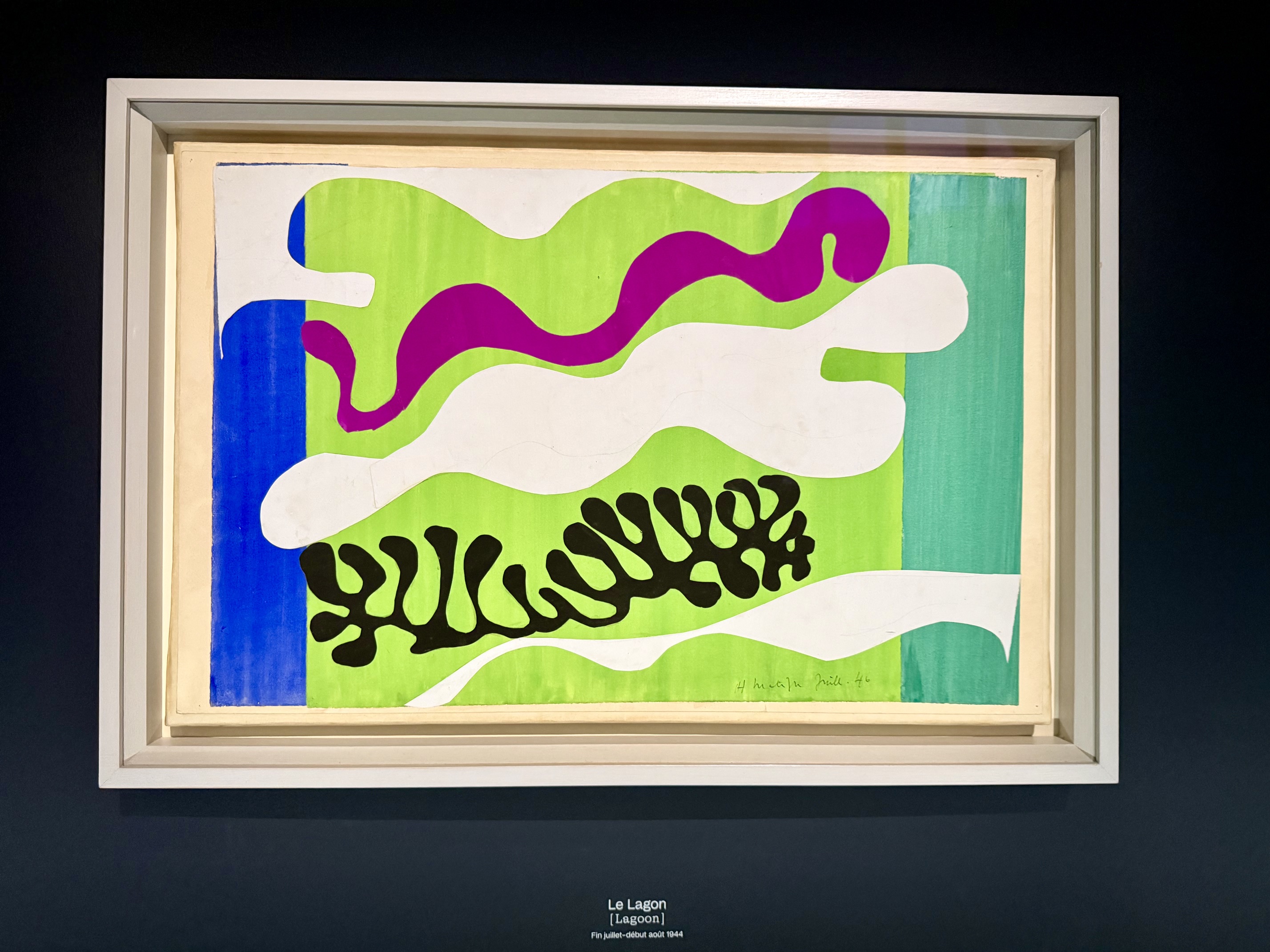
Matisse: Le Lagon [Lagoon]. 1944
I thought about the beauty and power of art again at the magnificent Matisse exhibition at the Grand Palais in Paris—over 300 works spanning his final thirteen years, including the monumental cut-paper gouaches he’s become synonymous with. Color, movement, scale. It’s running through July 26th and worth the visit if you’re in Paris this summer.
Back In New York
While I was in Provence, auction week was unfolding back in New York. Two Rothkos sold within days of each other: Brown and Blacks in Reds (1957) at Sotheby’s for $85.8 million, and No. 15 (Two Greens and Red Stripe) at Christie’s for $98.4 million, a new auction record for the artist. The Christie’s work had never been sold before; Agnes Gund acquired it directly from Rothko and held it for nearly sixty years.
Rothko is one I’ve always been drawn to. His work can feel deceptively simple at first, but the longer you stand in front of it, the more it reveals itself. The depth of color, the scale, the emotional weight hold your attention.
That’s part of why it endures.
You see the same pattern across disciplines. In art, in architecture, and often in real estate, the most compelling work is defined less by excess and perhaps more by simplicity and restraint.