
AI Wealth. Bidding Wars. San Francisco.
There is a widening divide between rate-sensitive buyers and the wealth-driven market. It is becoming harder to talk about "the housing market" as though there were only one.

Contents
Summer color on a Manhattan sidewalk. One of those small pleasures of walking the city.
This week: Two Housing Markets — today’s market is increasingly split in two: constrained by affordability or fueled by wealth. The $10 Million Market — the top end is moving to a different rhythm. San Francisco’s AI-Fueled Housing Boom — bidding wars, tight inventory, and a sudden surge in wealth. Just Beyond New York — hiking, biking and some remarkable escapes surprisingly close to the city.
Two Housing Markets
There is a widening divide between rate-sensitive buyers and the wealth-driven market.
It is becoming harder to talk about “the housing market” as though there were only one.
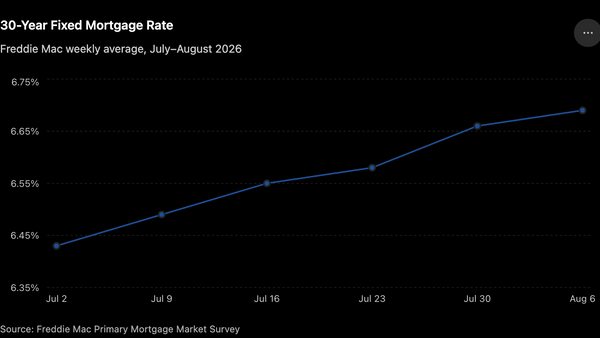
For much of the country, buyers are still contending with mortgage rates in the high-6% range (see graph below), affordability remains stretched, and activity has been sluggish. For many buyers, the math simply no longer works. Mortgage rates remain high, affordability is stretched, and a large part of the market has slowed accordingly.
And then there is the other housing market.
At the upper end, where buyers are often less dependent on financing and more influenced by stock-market gains, business liquidity and accumulated wealth, the picture looks very different. The contrast is becoming increasingly pronounced: one market is constrained by monthly payments; the other is driven by capital, scarcity and the desire to own exceptional real estate.
That divide is especially visible once you get to the very top.
The $10 Million Market
Cash, scarcity, and the buyers moving aggressively.
Nowhere is the divide more apparent than in the $10 million-plus market.
In 2025, there were 2,261 U.S. home sales at $10 million or more, totaling $38.63 billion.
In the ten largest ultra-luxury markets, transactions rose more than 31% from the prior year.
At a time when much of the country was wrestling with affordability and elevated mortgage rates, the very top of the market was moving in the opposite direction.
Manhattan is part of that story. Even as we move through the traditionally quieter summer months, buyers at the high end continue to transact. In the week of July 27 through August 2 alone, 21 Manhattan contracts were signed at $4 million and above, representing approximately $135 million in volume.
Looking Back at Q2, 2026
- 56 contracts above $10 million were signed in Q2, the highest quarterly total of the decade.
- Total contract volume reached $1.5 billion, slightly above the 10-year quarterly average of $1.4 billion.
- One of the quarter’s biggest deals, an $80 million contract at 80 Clarkson, was not included in the $10M+ tally, meaning the strength at the very top was even greater than the headline numbers suggest.
- All of this happened despite high mortgage rates, the new pied-à-terre tax, and broader geopolitical uncertainty.
The $10 million buyer is simply operating under a different set of conditions. Financing costs matter less when a purchase is made with cash or substantial equity. Stock-market gains, business exits, family wealth and global capital matter much more.
And that is why the luxury market can remain active even while the broader housing market slows.
It also helps explain what is now happening in San Francisco.
Which brings me to a city I’ll be visiting this week, and a housing market that has changed with extraordinary speed.
San Francisco’s AI-Fueled Housing Boom
San Francisco’s housing market is making headlines again. It feels as if only yesterday everyone was decrying the city’s real estate market: down and out, written off by many. Yet, in what feels like a matter of seconds, it has made a remarkable turnaround. Today, San Francisco is booming.
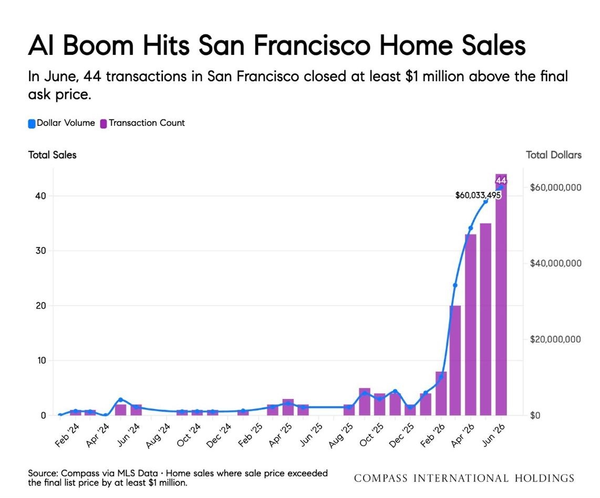
The most striking part is how quickly buyer behavior has changed. The graph below shows the extraordinary pace of change in just the past 6 months. People who might have waited a year ago are now moving aggressively, and some homeowners who had no intention of selling are suddenly being presented with offers that make them stop and think.
In June alone, 44 San Francisco homes closed at least $1 million above asking.
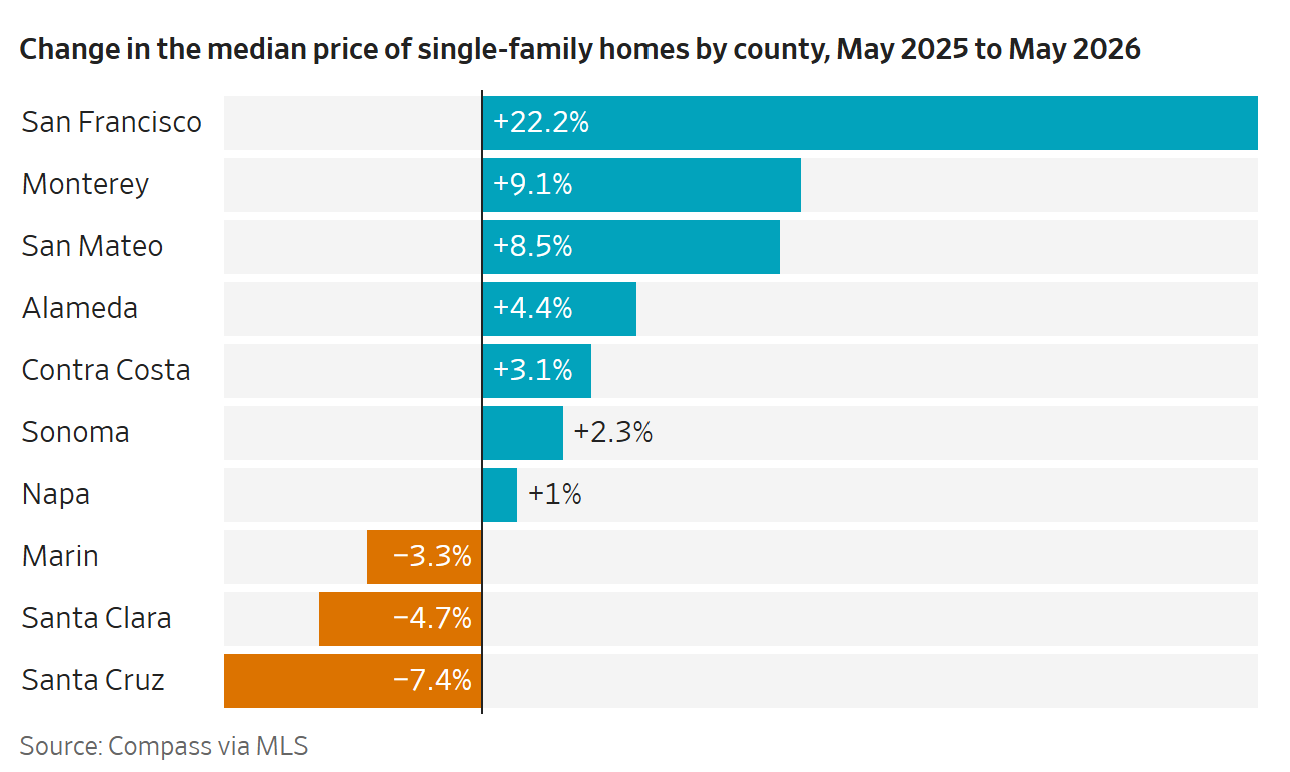
At the same time, single-family home prices in San Francisco were up 22.2% year over year, far outpacing the surrounding counties shown here:
Homes in the $2 million to $5 million range are attracting multiple offers, luxury properties are trading at record pace, and well-priced listings are often selling far above their asking price. At the same time, many homeowners are choosing not to sell, keeping inventory tight and further intensifying competition.
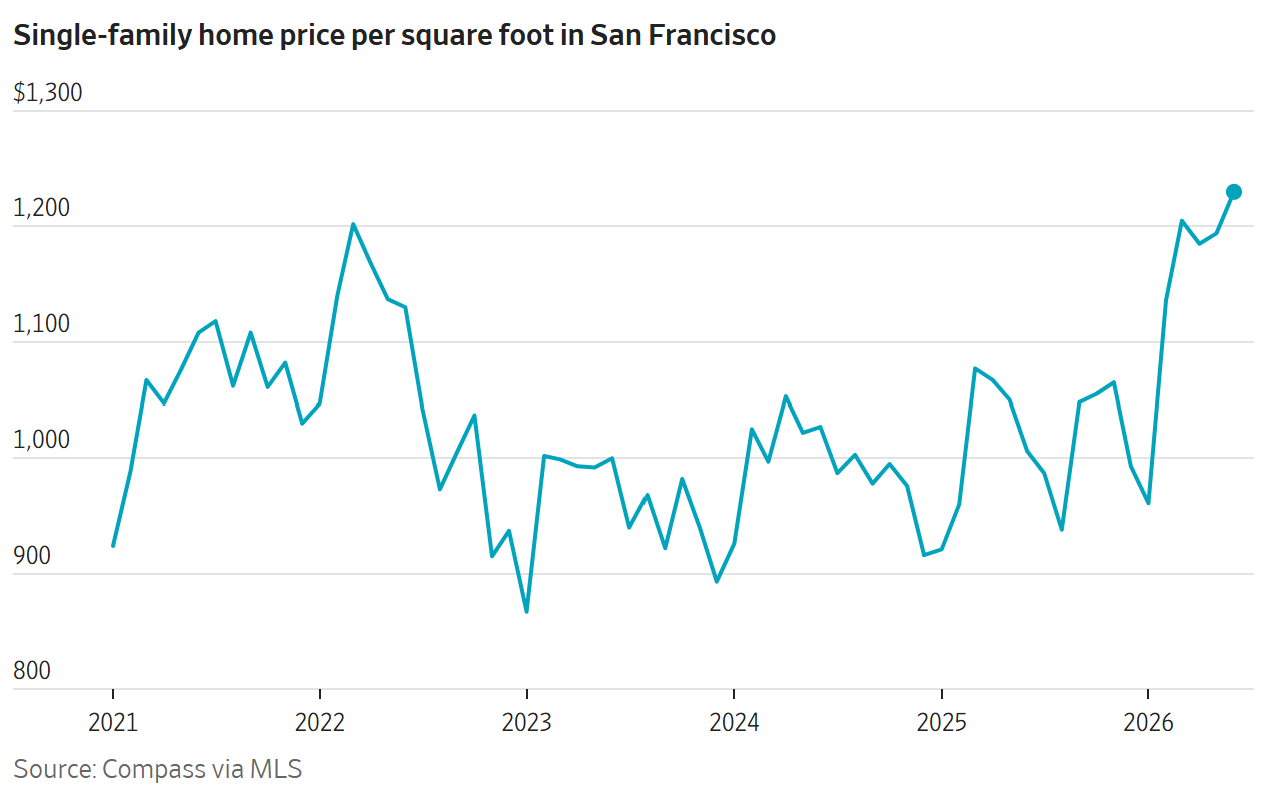
Price per square foot has also moved sharply higher. Add to that the extraordinary wealth being created around AI, and you have a market where demand is rising faster than supply.
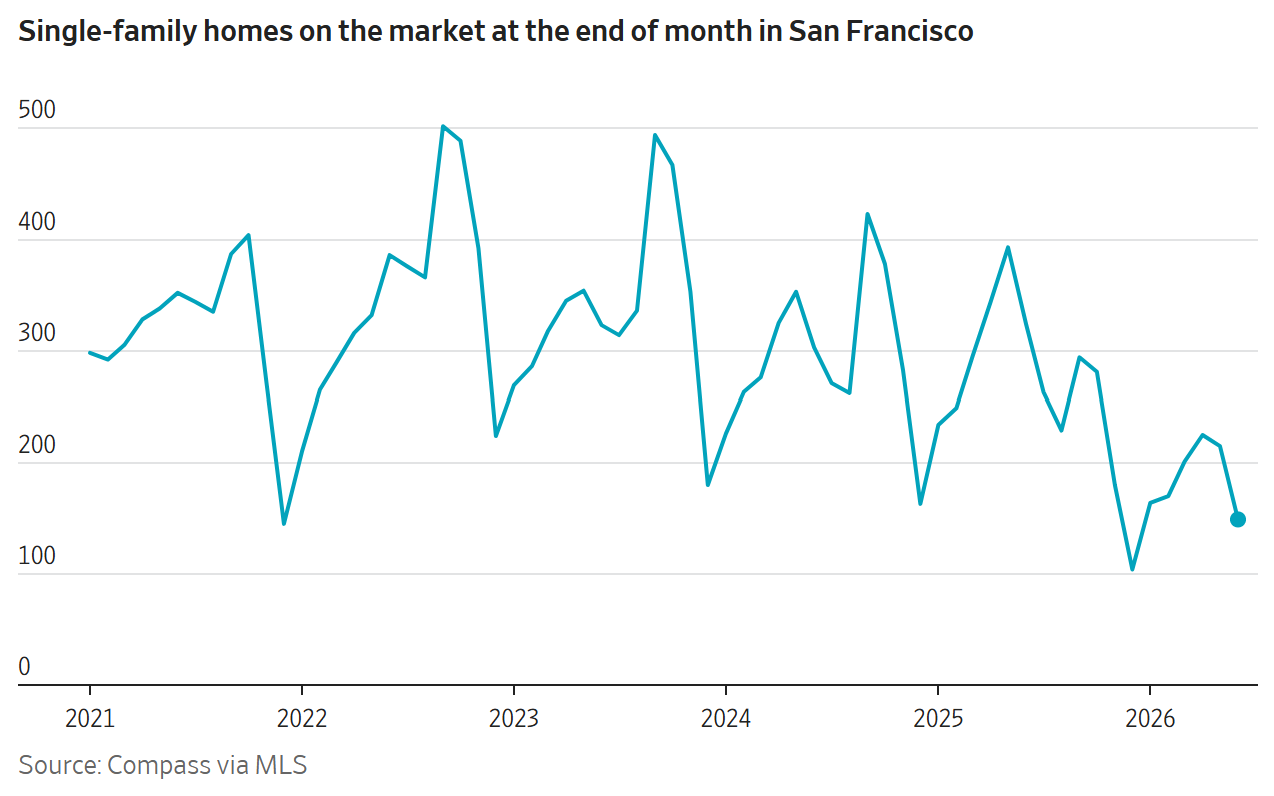
Some buyers are said to be purchasing ahead of anticipated liquidity events tied to AI companies. Others already have access to capital and are acting now, and often very aggressively.
For many of the newly wealthy, real estate is an obvious place to put money. There is the deeply personal appeal of owning one’s own home, but also prestige, permanence, and diversification away from technology.
While Manhattan is driven by a broader mix of industries and global capital, the underlying lesson is universal. Economic growth, job creation, and wealth generation often find their way into housing first.
San Francisco and Manhattan are very different markets, but the same force is at work in both: substantial wealth competing for a limited supply of exceptional homes.
Just Beyond New York
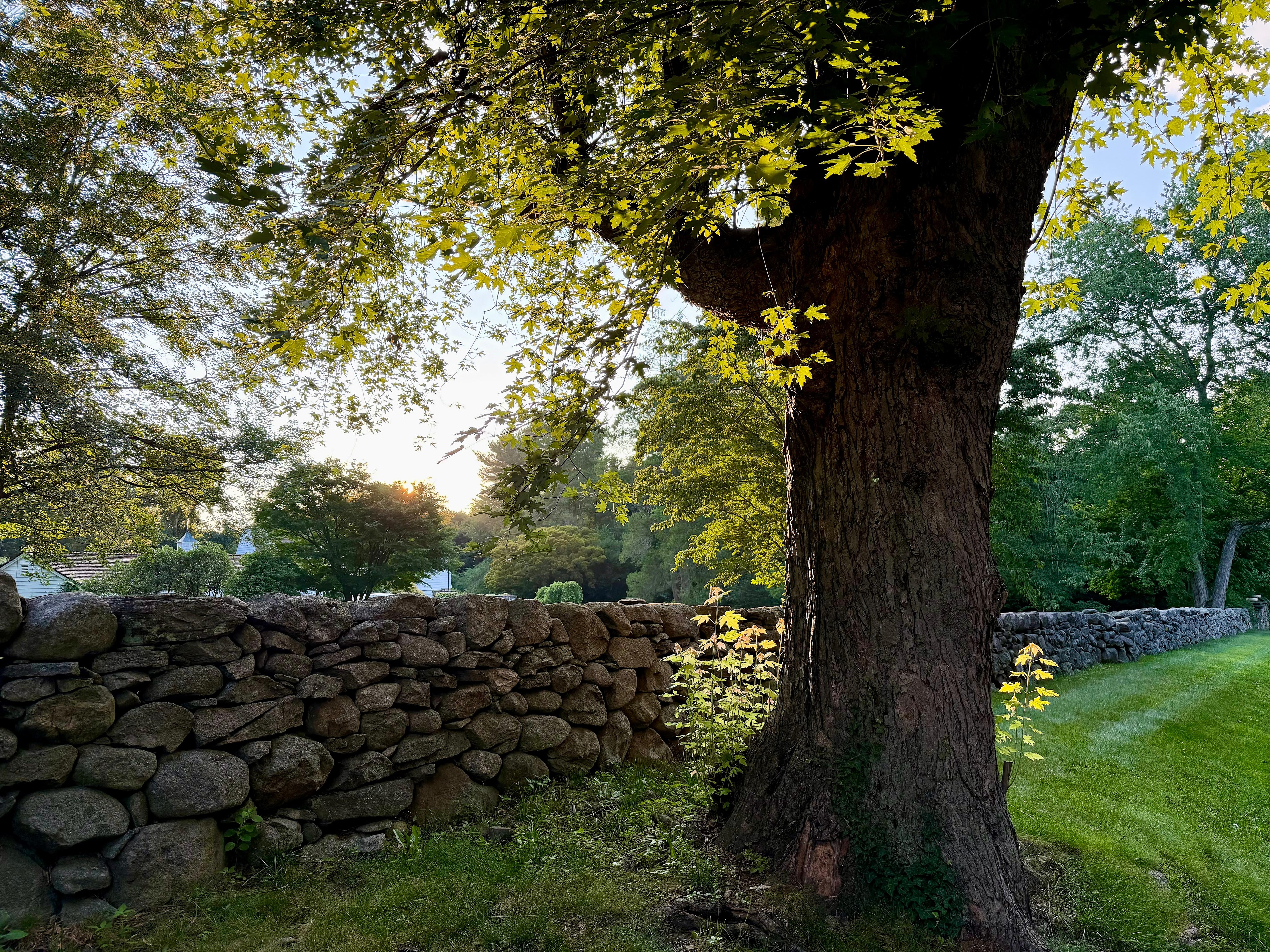
On a recent walk in CT. An hour’s train ride from the city.
I love New York, the city. I get energy from it. I thrive in it. I love that I can walk out my door and step into the most vibrant urban place I know: the people, the diversity, the culture, the art, and always that unmatched energy.
But, like many people, I also need a break from the pace. And one of the things I love most about living here is that my retreat can be only an hour’s drive or train ride away.
Within surprisingly easy reach of Manhattan are extraordinary places to hike, bike, walk in spectacular nature, kayak, or simply spend a quiet afternoon outdoors. Hudson Valley, Connecticut, Bear Mountain, the Hamptons all offer a completely different rhythm without requiring a major trip.
For me, that proximity is part of the luxury of New York: the intensity of the city when I want it, and the ability to step away from it when I need to.
I’m always looking for new places to explore. What are your favorite outdoor escapes within easy reach of New York? I’d love to hear them.