
5 New Buildings. 3 Museum Shows. 1 Extraordinary City.
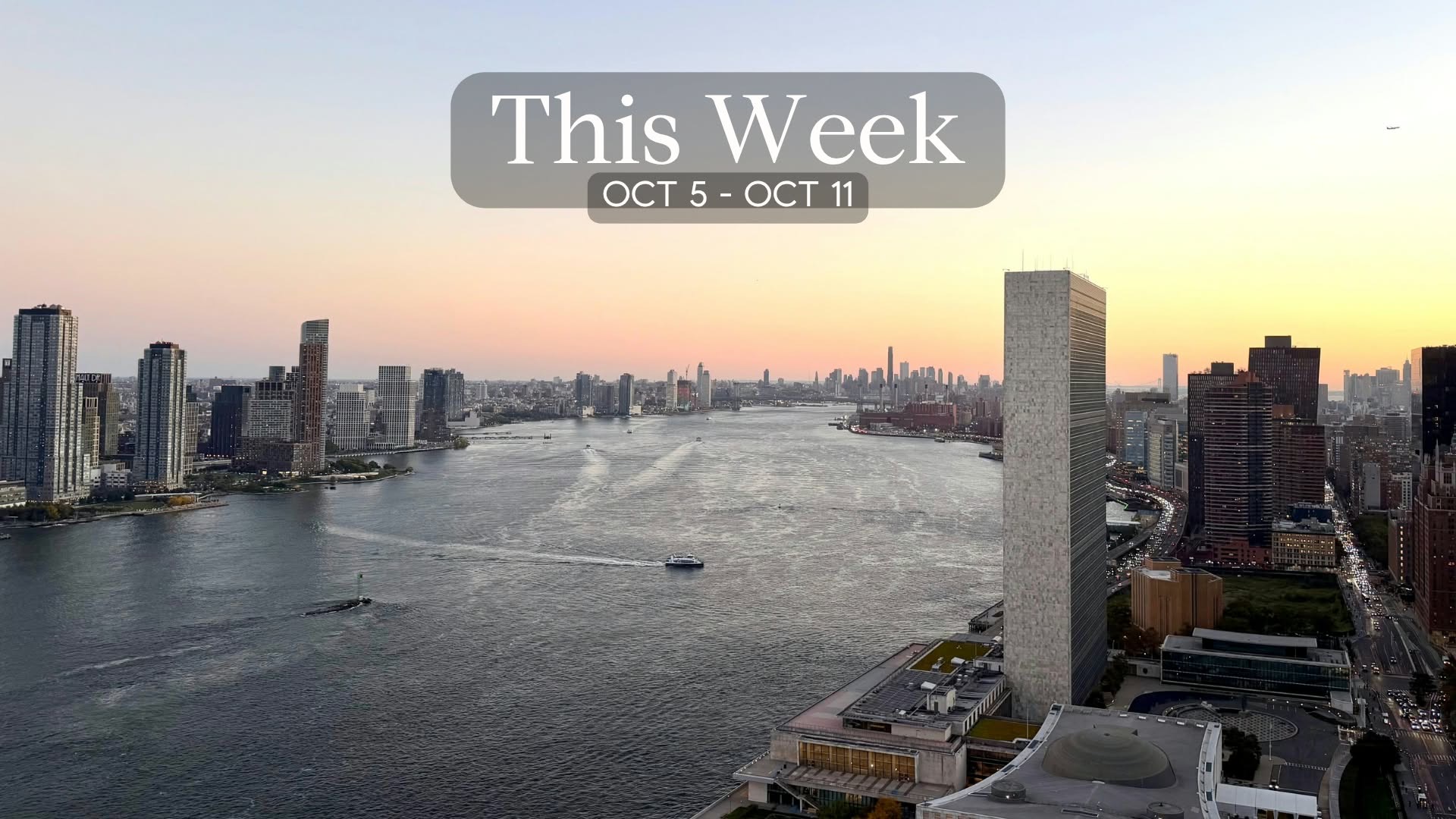
I've been on countless New York rooftops, but the view from this one was a genuine WOW moment. At sunset, looking south over the United Nations, along the East River
Contents
I’ve been on countless New York rooftops, but the view from this one was a genuine WOW moment. At sunset, looking south over the United Nations, along the East River, all the way to Downtown Manhattan and Brooklyn. A sneak peek from one of my coming-soon listings. Reach out for additional info.
Manhattan: A Market of Contrasts
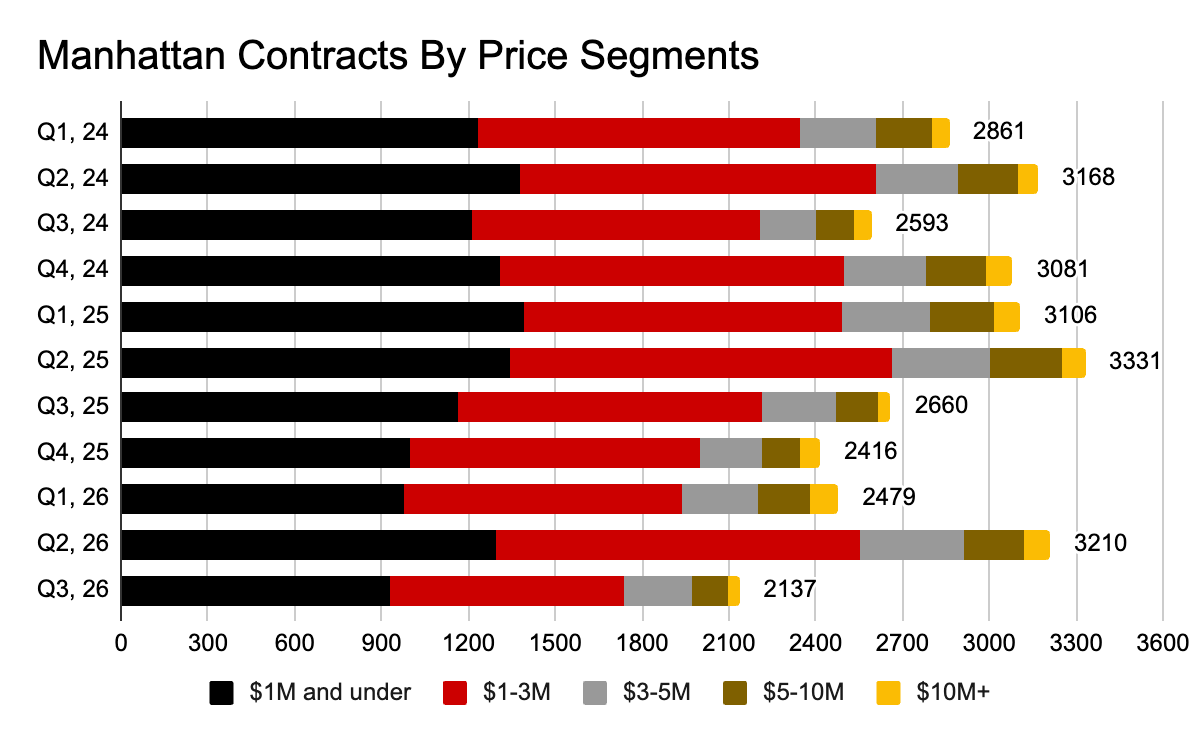
Manhattan’s residential market slowed considerably in the third quarter, with contracts down 19.7% from Q3 2025. The steepest declines were in properties priced below $3 million, where activity fell more than 20%.
Interestingly, the $3 million to $5 million segment was more resilient, declining just 9.7%. And while contracts above $10 million also fell in Q3, the ultra-luxury market remains 5.5% ahead of last year through September.
What’s Behind the Slowdown?
Mortgage rates are certainly a factor. After falling below 6% in February, the average 30-year fixed rate climbed steadily, accelerating in September and reaching 7.4% last week. But inventory has also tightened, giving buyers fewer properties to choose from.
And here’s an important distinction: Fewer transactions don’t necessarily mean falling property values. Nevertheless, buyers have more negotiating power.
Manhattan’s median sale price actually rose 4% year over year, while median price per square foot increased 5%.
Buyers are, however, gaining some negotiating leverage. The average discount from the last asking price widened to 3.7% in September, with condos averaging 4.5% and co-ops 1.9%.
One important caveat: A greater share of higher-priced sales can push overall median prices up, even when individual properties aren’t appreciating at the same pace.
Sources: Compass Research; Corcoran Market Research, part of Compass International Holdings.
Five New Developments. Five Visions of New York.
101 Franklin Street, Tribeca
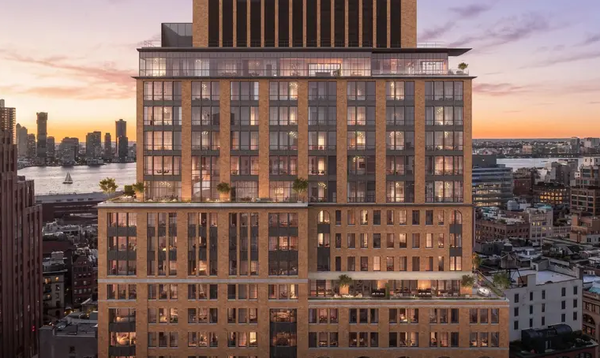
101 Franklin Street, Tribeca | Design by Steven Harris Architects
72: 2- to 5-bed condos
Directly across from the iconic Jenga Tower at 56 Leonard, a former 1948 office building is being transformed into 72 luxury condominiums. Designed by Steven Harris Architects, with interiors by Rees Roberts + Partners, the 21-story conversion will feature a handsome red-brick façade, dramatic arched windows, and four additional floors.
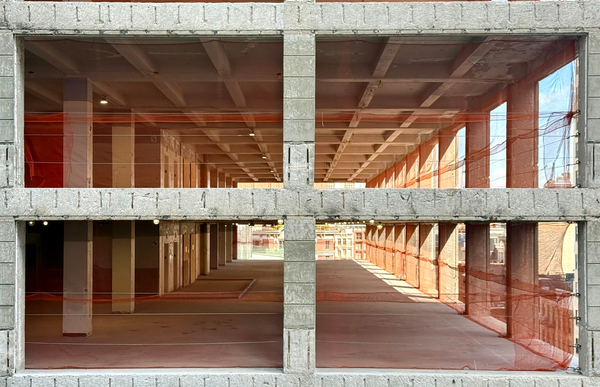
When I visited 56 Leonard with a client exactly a year ago, I took a photograph of 101 Franklin across the street (above photo). The building had been stripped down to its bare floor plates, and you could literally see straight through to the other side. At the time, the proposed redevelopment was a strikingly modern commercial design by Rafael Viñoly Architects, with floor-to-ceiling glass enclosed by a tubular structural frame.
Those plans have since been replaced by an entirely different architectural vision. As reported by New York YIMBY in March, Steven Harris Architects has introduced a more traditional design, with brickwork and grand arched windows that offer an interesting contrast to the boldly cantilevered glass tower across the street.
Sales are expected to launch this fall, with completion anticipated in 2029.
Bleecker Street, NoHo
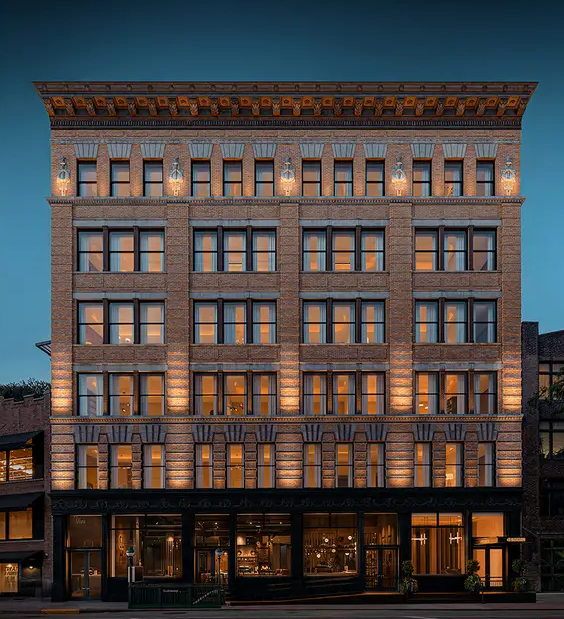
Bleecker Street, NoHo | Design by ADB Associates
Eleven 1 to 4-bed condos | Asking prices: $4.1M - $15.5M
At the corner of Bleecker and Mulberry Streets, a handsome six-story building dating to 1896 is being converted into just 11 luxury condominiums.
Developed by Caedes Group, with interiors by London-based Rigby & Rigby, the project will preserve many of the building’s original architectural details, including restored cast-iron columns and barrel-vaulted ceilings reaching 13 feet. The residences will feature Italian millwork, Calacatta Monet marble kitchens, and, in select homes, fireplaces and private saunas.
A landscaped rooftop and extensive wellness facilities complete the offering. It’s an appealing combination of NoHo’s industrial architectural heritage and contemporary luxury living, with completion expected in the second half of 2027.
550 West 21st Street, West Chelsea
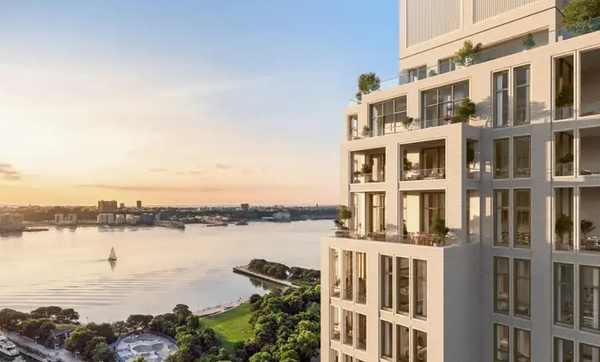
550 West 21st Street, West Chelsea | Design by Thomas Juul-Hansen
83 two- to five-bed condos
Anticipated asking prices: Starting at $2.5M
One of the last major waterfront development sites in West Chelsea is becoming an 83-residence luxury condominium designed by Danish architect Thomas Juul-Hansen.
Rising 23 stories directly across from Chelsea Piers, the building will feature a façade of Italian brick and limestone, with setbacks creating private terraces and loggias. More than 75% of the residences will have private outdoor space, many with sweeping Hudson River views.
Directly across the street stands Norman Foster’s 551 West 21st Street, and this latest addition brings another prominent architectural name to West Chelsea’s extraordinary collection of buildings by internationally acclaimed architects. With Hudson River Park on one side and the High Line and Chelsea’s galleries on the other, the location is hard to beat.
Amenities include an indoor pool, landscaped courtyard, and a private porte-cochère. Sales are expected to launch later this Fall, with completion anticipated in 2027.
West 88th Street, Upper West Side
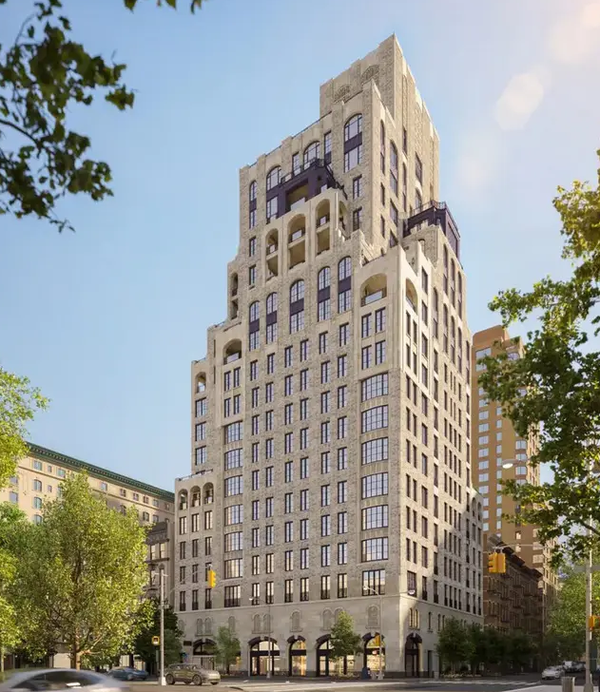
West 88th Street, Upper West Side | Design by Robert A.M. Stern Architects
36 three- to five-bedroom condos
Anticipated asking prices: $2M - $17.25M
Robert A.M. Stern Architects is adding another building to its impressive Upper West Side portfolio, which already includes 15 Central Park West, The Harrison, and The Henry.
Rising 18 stories at the corner of Amsterdam Avenue and West 88th Street, on the former site of the popular Mermaid Inn restaurant, the building will feature 36 spacious condominium residences with three to five bedrooms.
Its Art Deco-meets-Art Nouveau design combines warm brick, limestone detailing, and graceful curved windows, while many residences will enjoy private terraces and loggias.
Particularly interesting is that this will be the firm’s first all-electric residential building, combining traditional architecture with modern sustainability.
Sales are currently in preview, with occupancy expected in spring 2027.
809 Madison Avenue, Upper East Side Gold Coast
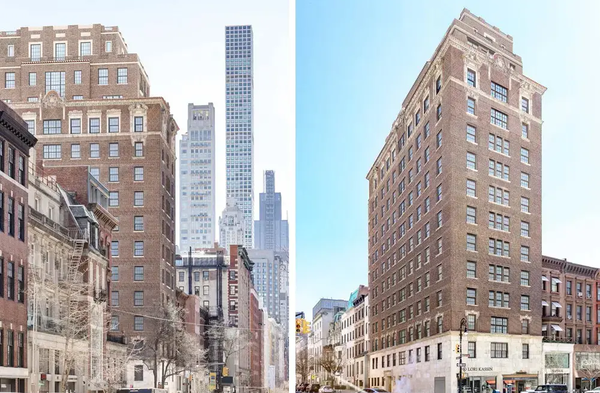
809 Madison Avenue, Upper East Side Gold Coast | Design by Robert A.M. Stern Architects
12 Residences
At the corner of Madison Avenue and East 68th Street, developer Harry Macklowe is undertaking an ambitious transformation of a 1920s prewar building into an ultra-luxury condominium designed by Robert A.M. Stern Architects.
Acquired for $49 million in 2025, the property is undergoing a restoration of its limestone, brick, and terra-cotta façade, along with a rooftop expansion. The latest plans call for just 12 residences, most occupying an entire floor, with private elevator landings, generously proportioned rooms, and fireplaces.
Apartments are expected to average approximately 4,000 square feet, with prices reportedly starting above $20 million.
Just one block from Central Park, this is an increasingly rare proposition: the scale and privacy of a grand prewar co-op with the flexibility of condominium ownership.
Sales are anticipated later this year.
Art in NY This Fall: 3 Exhibitions on My List
Three exhibitions have caught my attention this fall, each exploring something quite different: the intertwined careers of two giants of Abstract Expressionism; a sculptor whose life ended tragically on September 11; and an artist using artificial intelligence to explore the workings of the human mind.
Krasner and Pollock: Past Continuous
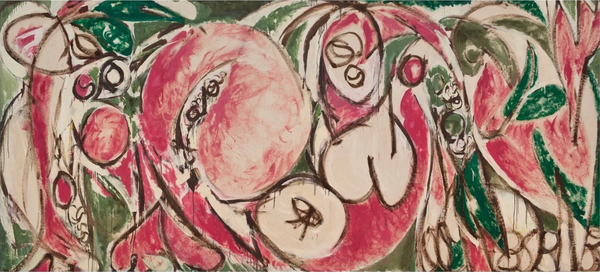
Lee Krasner, The Seasons (1957). Painted the year after Jackson Pollock’s death, this monumental work evokes growth, renewal, and the cycles of nature through its swirling pink, green, and white forms. Part of the Whitney Museum of American Art’s collection, currently on view at The Met.
The Metropolitan Museum of Art | October 4, 2026 – January 31, 2027
Jackson Pollock and Lee Krasner met in New York in 1941 and married four years later. Both were pioneering figures in Abstract Expressionism, yet Krasner’s considerable achievements were long overshadowed by her husband’s fame.
According to The Met, this is the first major New York exhibition devoted to either artist in more than 20 years. Featuring over 120 works, it traces their artistic development before and during their marriage, and Krasner’s evolution following Pollock’s death in 1956.
What particularly interests me is the opportunity to see their work side by side, and explore how their artistic practices influenced one another. But equally important, I love that Krasner is being recognized not simply as Pollock’s wife, but as a major artist in her own right.
Michael Richards: Free F’All
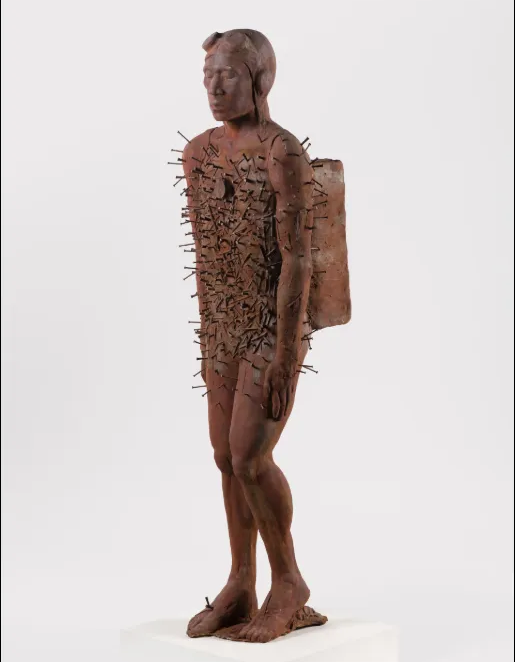
Michael Richards, Untitled (Free F’All), 1997. Collection of the Brooklyn Museum. (Image: Courtesy of the Brooklyn Museum)
Brooklyn Museum from September 11, 2026–June 6, 2027
This exhibition has a particularly poignant history.
Michael Richards, a Brooklyn-born artist raised in Jamaica, died at age 38 while working in his studio on the 92nd floor of the World Trade Center’s North Tower on September 11, 2001.
The Brooklyn Museum’s presentation centers on his 1997 sculpture Free F’All, a life-sized cast of his own body as a military pilot, pierced by dozens of nails. The museum describes the work as a tribute to the Tuskegee Airmen, the pioneering Black aviators who served during World War II despite racial segregation. The figure also draws on African spiritual traditions and Christian imagery of martyrdom.
Created four years before Richards’ death, the sculpture has acquired a haunting significance. Its presentation opened on September 11, 2026, exactly 25 years after the attacks.
Source: Brooklyn Museum, exhibition description and collection materials.
Pierre Huyghe: UUmwelt
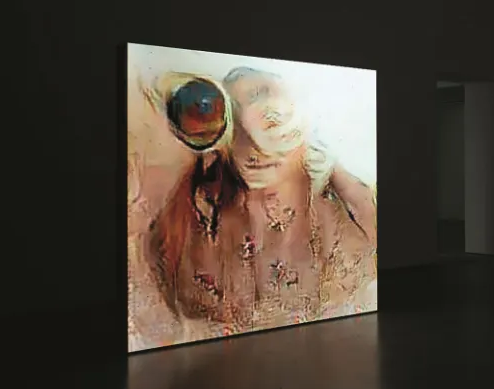
Museum of Modern Art until 29 November 2026
Can artificial intelligence reconstruct what we’re thinking?
That’s the fascinating question behind French artist Pierre Huyghe’s UUmwelt, an installation of freestanding screens in MoMA’s Abby Aldrich Rockefeller Sculpture Garden.
According to MoMA, Huyghe collaborated with neuroscientists in Kyoto, Japan, who recorded a person’s brain activity as they imagined different images. A neural network then translated those scans into thousands of visual interpretations, producing strange, dreamlike images that seem to emerge from somewhere between human thought and machine imagination.
Even more intriguing, the installation continues to evolve in response to visitors’ movements, making the audience part of the artwork itself.
Amazing.
With AI increasingly influencing our daily lives, I’m particularly interested in experiencing how Huyghe brings together neuroscience, technology, and art.
Source: The Museum of Modern Art, exhibition description.