
A Tale of Two Fifth Avenue Icons, and Manhattan Year to Date
Up and down Park Avenue, the mums are in bloom, bringing bursts of color to the street and delighting passersby.
Contents
Up and down Park Avenue, the mums are in bloom, bringing bursts of color to the street and delighting passersby.
A Few Stories That Caught My Attention
Record-Breaking Rent at 625 Madison
An $11 billion hedge fund with just 35 employees has leased the top two floors of Related Companies’ new tower at 625 Madison Avenue.
Castle Hook Partners will take approximately 53,000 square feet at a reported $350 to $400 per square foot annually, setting a new global record for office rent. At the high end, that works out to more than $21 million a year.
The firm is expected to move in during the second half of 2029.
Source: Financial Times
Did Homeownership Help Create the Baby Boom?
Here is a fascinating connection.
The modern American mortgage and the Baby Boom emerged at almost exactly the same time.
Beginning in the 1930s, FHA and later VA programs helped establish the modern American mortgage: long-term, fixed-rate loans with much lower down payments.
Homeownership surged after World War II. So did births.
A 2025 study by economists Lisa Dettling and Melissa Kearney estimates that FHA- and VA-backed mortgages resulted in approximately 3 million additional births between 1935 and 1957, accounting for roughly 10% of the excess births associated with the Baby Boom.
The effect did not extend equally across the population. The researchers found no comparable increase among nonwhite women, consistent with the discriminatory lending practices of the period.
Source: National Bureau of Economic Research
Manhattan’s Great Advantage
Manhattan is one of the most energy-efficient places to live in America.
Yale Environment 360 points to a combination that is almost uniquely Manhattan: apartment living, extensive public transportation, walking, and relatively low car ownership.
Consider this:
- 77% of Manhattan households own no car at all, and
- 82% of employed Manhattanites travel to work by public transit, bicycle or on foot.
These are extraordinary figures for an American city.
Apartment living, mass transit, walking and shared infrastructure dramatically reduce the energy required for everyday life. One study estimated Manhattan’s territorial fossil-fuel emissions at approximately 4.7 metric tons of CO₂ per person, below New York City as a whole, far below many American metropolitan areas, at a level more commonly associated with some of Europe’s most energy-efficient countries.
Source: Yale Environment 360; peer-reviewed emissions study
Pied-à-Terre Surcharge Hits a Legal Snag
The new pied-à-terre surcharge has hit a legal snag this week. A Staten Island judge ordered New York City to redo parts of the rollout and issue new individualized notices to affected owners.
The city has appealed, so implementation is continuing for now. Approximately 17,000 owners have already been notified, and the current exemption deadline remains October 6.
Source: Reuters
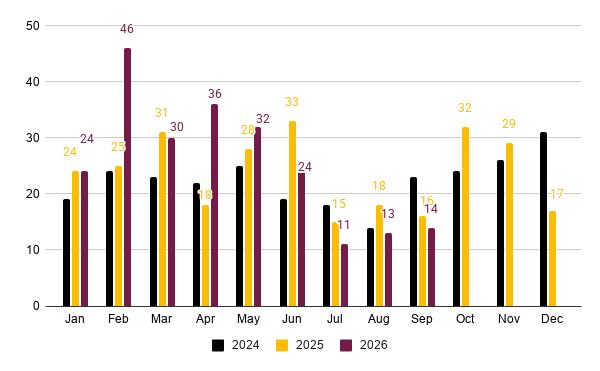
Manhattan Market Report: Year To Date
Every week I track supply, contracts and momentum across Manhattan to better understand where the market is headed. Here is what September is telling us.
Supply Continues to Tighten
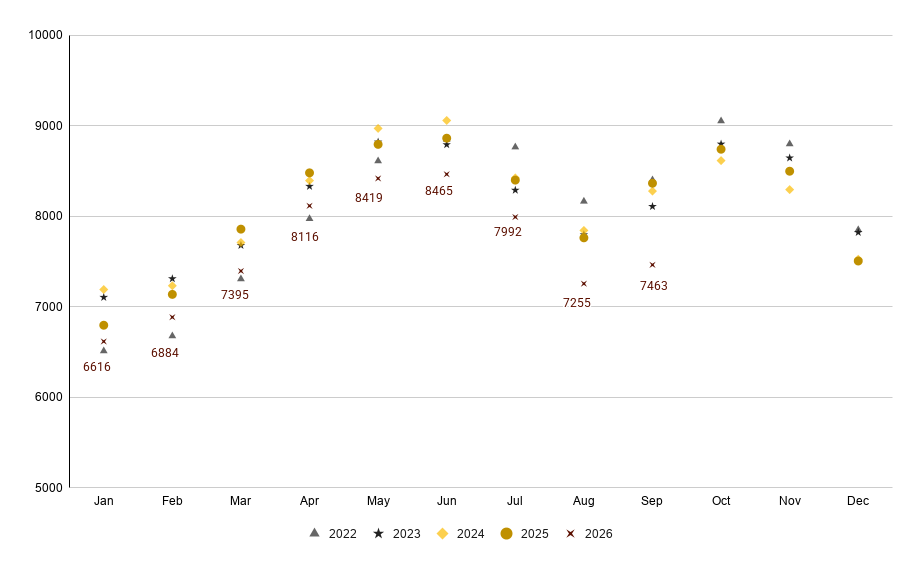
Manhattan averaged 7,463 homes for sale in September, down 10.8% from 8,633 a year ago and below September inventory levels in each of the previous four years.
Inventory typically declines over the summer, but this year the drop has been more pronounced. Buyers have fewer properties to choose from, particularly among homes that are well priced, well presented and in desirable locations.
Demand
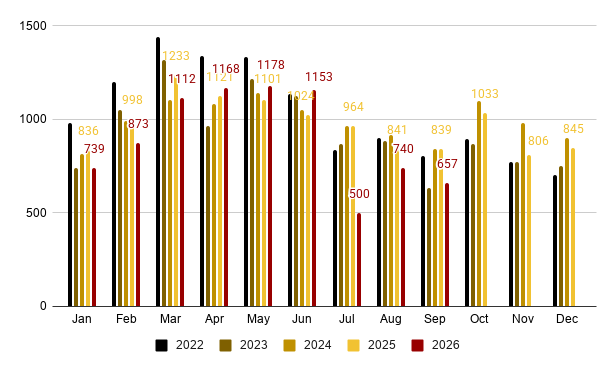
Contracts: All Price Points
September: 657 contracts were signed in September, compared with 839 last September, a decline of roughly 21.7%.
Year to Date: Through the first nine months of the year, overall contract activity is running about 9.3% below 2025.
Contracts: $4 Million+
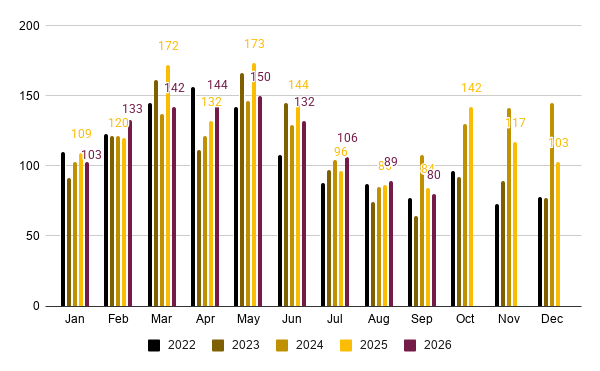
The higher end of the market continues to hold up better.
September: 80 contracts were signed at $4 million and above, compared with 84 last September, a decline of just under 5%.
Year to date: Activity is down only 3.3% from 2025, considerably less than the 9.3% decline across the market overall.
Contracts: $10 Million+
September: At the very top of the market, 14 contracts signed versus 16 last year.
Year to date: And yet, the $10 million+ market remains approximately 10.6% ahead of the same period in 2025, making it the strongest of the three segments on a year-to-date basis.
The pattern is striking: the higher the price point, the stronger the year-to-date performance.
When Carrying Costs Catch Up With the Address
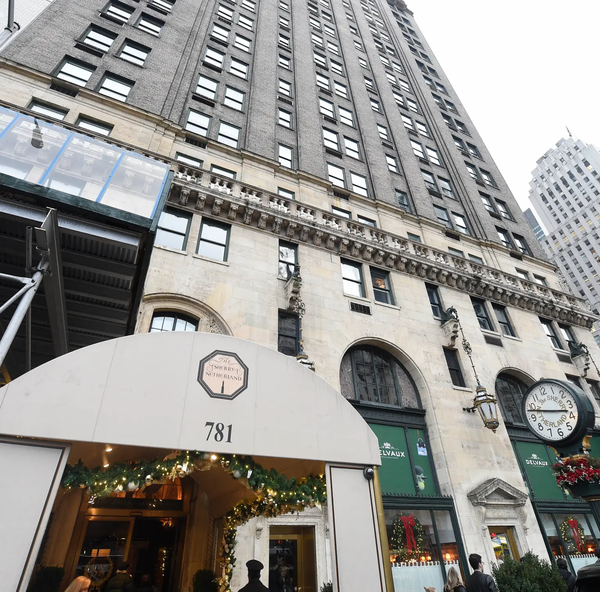
The Sherry-Netherland stands on Fifth Avenue across The Plaza, at the southeast corner of Central Park. (Source: NY Post)
The Sherry-Netherland has long represented a very particular version of Manhattan luxury: Fifth Avenue, Central Park views, white-glove service and hotel-style living. Today, it is also becoming a case study in what happens when the cost of ownership begins to weigh on the value of even the best address.
A 7,000-square-foot apartment at the iconic Fifth Avenue co-op is reportedly in contract for approximately $12 million, after its owner purchased it for $67.5 million in 2015. If the deal closes at that price, the $55.5 million decline would represent the largest individual residential loss ever recorded in New York City, according to appraiser Jonathan Miller.
And it isn’t an isolated example.
Another Sherry-Netherland apartment that sold for $11.1 million in 2011 is now listed at $1.6 million, an 85.6% decline. At the same time, maintenance has climbed dramatically, from $6.67 per square foot in 2016 to $12.15 in 2026, according to Miller’s data. That’s an increase of roughly 82%.
The building offers an extraordinary level of service, including daily housekeeping and evening turndown. But that service comes at a price: monthly carrying costs for some of the largest apartments can approach $100,000.
Despite the discounts, buyers are returning. Former Disney CEO Michael Eisner recently purchased an apartment for $10 million, while actress Marlo Thomas reportedly paid $2.75 million for a three-bedroom in August. That apartment last sold for $8.5 million in 2012.
The Sherry-Netherland illustrates something important about Manhattan luxury real estate. Buyers aren’t simply pricing the apartment or the address. They are pricing the entire ownership experience: maintenance, assessments, services, building condition, liquidity and, in some cases, the cost of bringing a grand apartment back to its former glory.
Even on Fifth Avenue, the purchase price is only part of the picture.
What Do You Change at the Frick?
Annabelle Selldorf on Reimagining the Frick

The Frick Collection’s newly reimagined Garden Court, part of Annabelle Selldorf’s $220 million renovation. (Source: FT)
A recent Financial Times piece on Annabelle Selldorf’s renovation of the Frick sent me back to a place I already know well.
The Frick is only one short block from my office. I don’t pop in every week, but I do make a point of walking by as I make my way around the city.
I am especially drawn to the 70th Street Garden, designed by Russell Page. Behind its grand wrought-iron gate is a reflecting pool with water lilies in summer, framed by lawn, gravel paths and beautiful plantings. It was conceived as a viewing garden rather than one to be entered, which somehow makes it even more alluring.
And that garden helps explain why changing the Frick was never going to be easy.
For years, the museum wrestled with how to expand. An earlier 2014 proposal would have built on the site of the Russell Page garden. After considerable public opposition, the plan was withdrawn in 2015 and the Frick started again.
What followed was an unusually careful search. Over the next 18 months, the museum considered 20 architects from around the world before selecting Annabelle Selldorf.
Her solution was much more ambitious than it first appears.
For the first time, visitors can now climb to the second floor of the original Frick residence, where the family’s former private rooms have become intimate galleries. New exhibition spaces were added, the former reception pavilion was reworked to create an additional level, and new education spaces, conservation facilities, a café and a 220-seat auditorium were introduced.
The museum and the Frick Art Research Library are now more directly connected, and the way visitors move through the building has been fundamentally rethought.
Yet the original house still feels like the Frick.
The gardens still shape the experience. And the mansion, rather than the new architecture, remains at the center of it all.
That balance is what makes Selldorf’s work so impressive: she managed to give the Frick considerably more space, function and life without making it feel like a different place.
Sources: Financial Times; The Frick Collection